
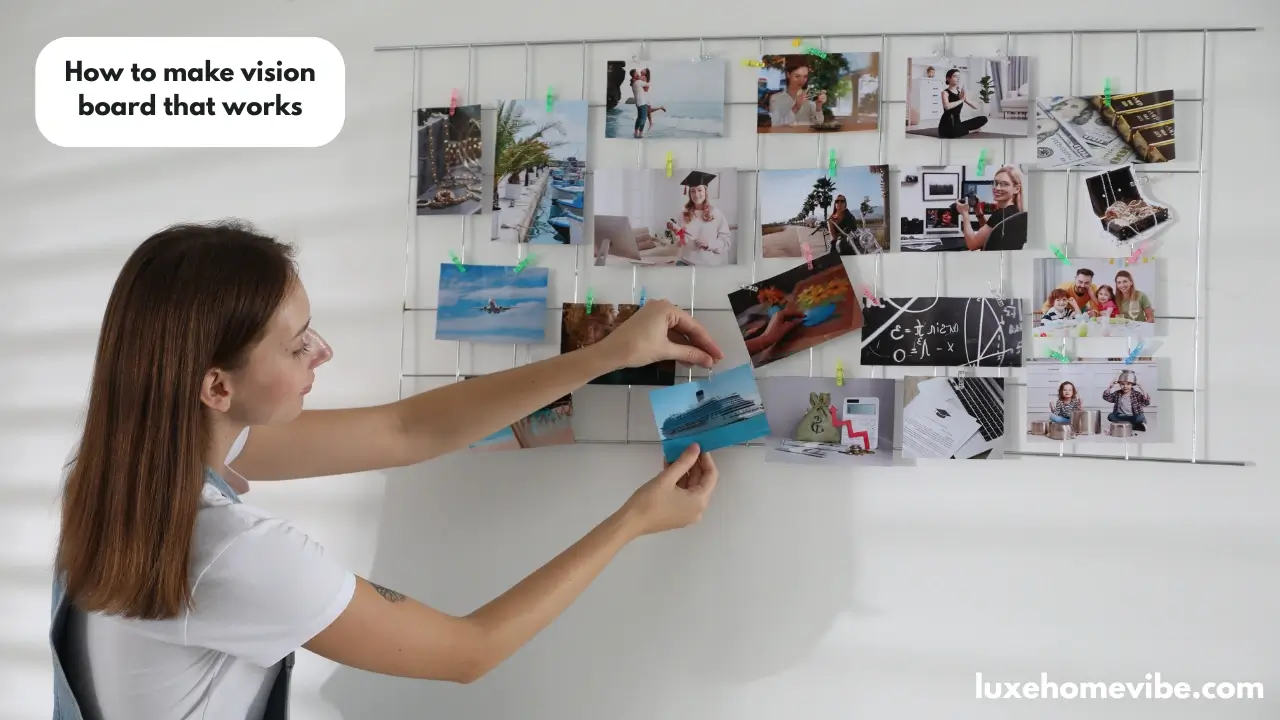
Make a vision board using your own face. Most vision boards fail due to a simple reason. They use others’ pictures and never turn into real action. It is a common question: “How to make a vision board that works?”. Keep your vision board in front of you every time.
Visualizing your goals is important, but it is only one step. Your brain needs a clear goal and a plan, not just a nice image to look at. If you want to become a doctor, make a photo of a doctor using your face.
It inspires you a lot to become a doctor. Like this, use your face images in your vision board. Then you can build a vision board that actually pulls its weight. This guide helps you in every step, from picking your goals to using your board each day.
- What Is a Vision Board and How Does It Work Well?
- Before You Start, Get Clear on Your Goals
- What You’ll Need to Make a Vision Board
- How to Make a Vision Board That Works (Step-by-Step)
- Vision Board Ideas for Different Goals
- Common Vision Board Mistakes to Avoid
- Best Tips for Making Your Vision Board More Powerful
- Frequently Asked Questions
- Conclusion
What Is a Vision Board and How Does It Work Well?
A vision board is a collage of images, words, and quotes that show your goals. You build it to remind yourself, every day, what you are working toward. Think of it as a snapshot of the life you want to create.
People use vision boards because pictures stick in your mind faster than plain to-do lists. A photo of your dream trip feels more real than a line item on a spreadsheet. That extra pull keeps your goals close to the surface of your mind.
Here is the simple formula behind why they work: visualization plus focus plus action. Looking at your goals daily keeps them on your radar. That focus nudges you toward chances and choices that move you closer to them. But none of that matters unless you follow through with real steps.
You can build your board as a physical board or a digital one. A physical board uses paper, pins, and glue. A digital board lives on an app or your phone’s lock screen. Both work well. Pick the one you will actually check each day.
Before You Start, Get Clear on Your Goals
Do not jump straight to cutting out pictures. Take a few minutes first to think about what you truly want. This step makes the biggest difference in whether your board works.
Ask yourself what you want your life to look like a year from now. Think across a few areas, like your career, health, relationships, and home. Jot down anything that comes to mind, even if it feels like a stretch.
From that list, choose five to eight goals that matter most to you. Fewer goals keep your board focused instead of scattered. You can always build a new board once you reach these goals.
As you narrow your list, think about feelings, not just achievements. Ask yourself how you want to feel once you reach each goal. A goal like “get a promotion” might really mean you want to feel confident and secure.
Finally, make each goal specific. “Get healthy” is hard for your brain to act on. “Walk 20 minutes a day, four times a week” gives you something clear to picture and do.
What You’ll Need to Make a Vision Board
Once your goals are set, gather your supplies. What you need depends on whether you go physical or digital.
Physical Vision Board
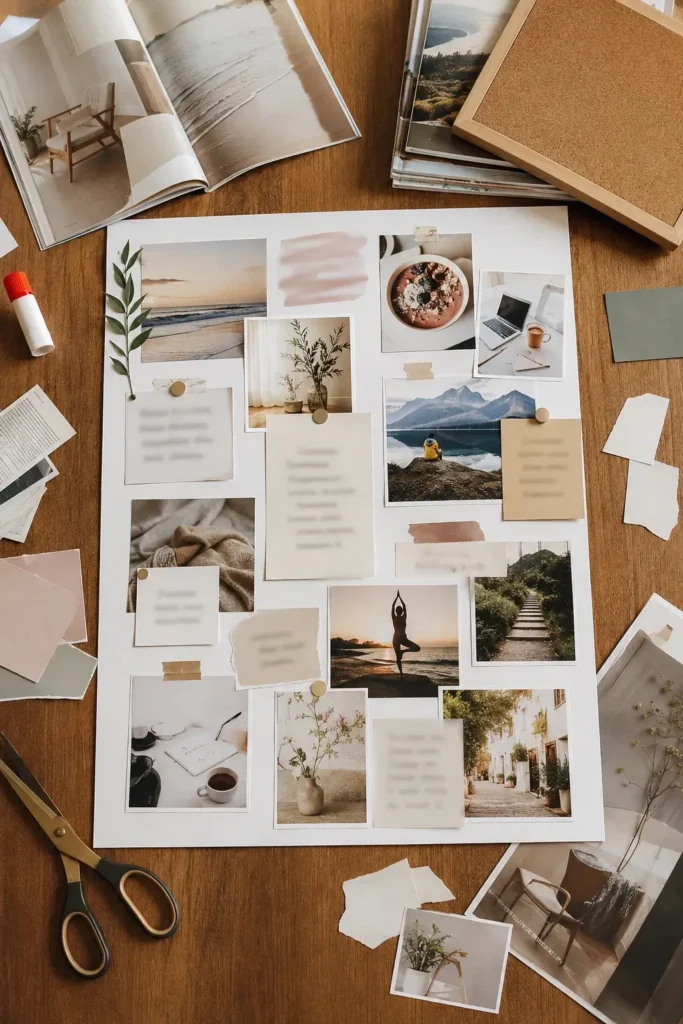
- A poster board or large sheet of paper
- A cork board, if you want to swap pictures easily
- Old magazines for images and words
- Glue or a glue stick
- Scissors
Digital Vision Board
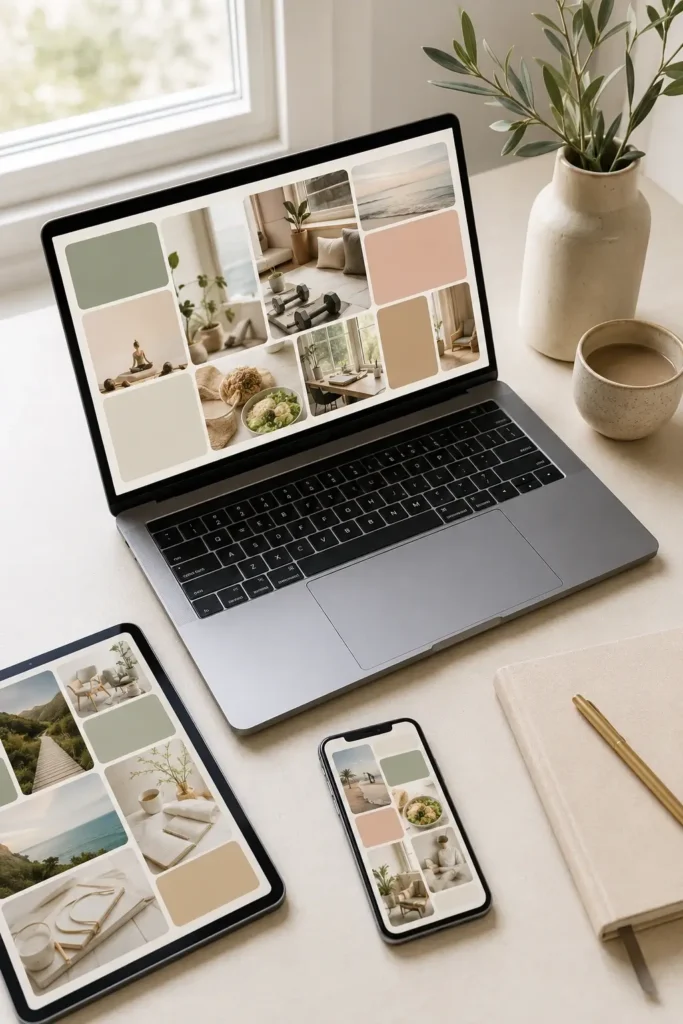
- Canva, for easy drag-and-drop templates
- Pinterest, for saving and organizing images
- PowerPoint, if you want full control over layout
- Google Slides, a free option that works on any device
You do not need every item on these lists. Grab what you already have and start there. A simple board built today beats a perfect board you never finish.
How to Make a Vision Board That Works (Step-by-Step)
This is the part that turns a craft project into a tool you actually use. Follow these steps in order, and do not skip any.
Step 1: Write Down Your Goals
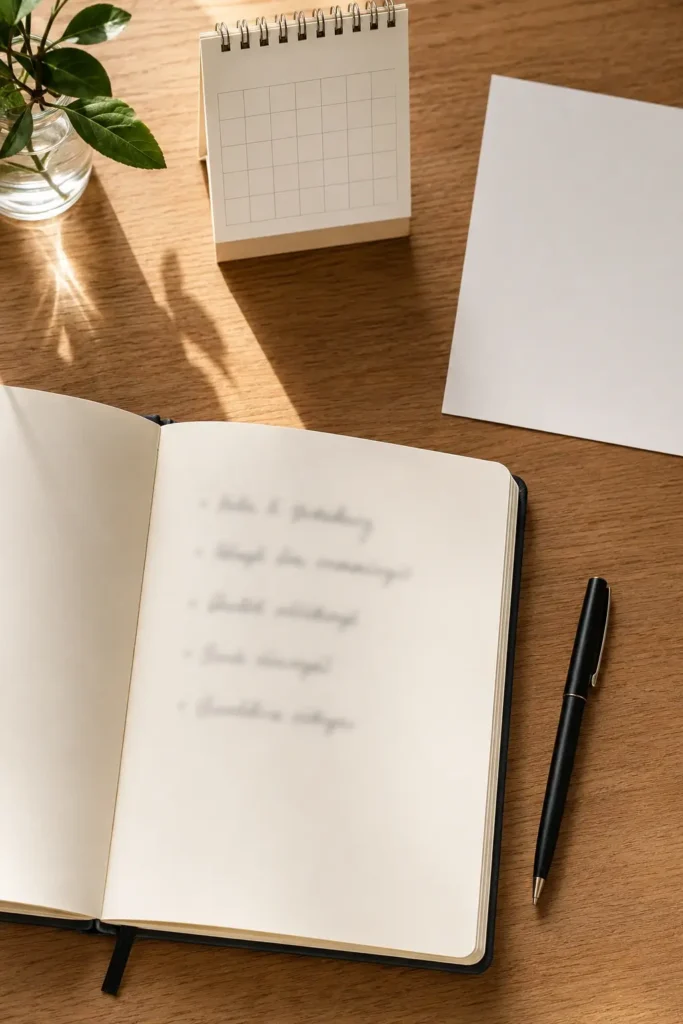
Start with words, not pictures. Write out your five to eight goals in clear, simple language. This step keeps your board grounded in real intentions instead of random inspiration.
Keep this list next to you as you build your board. You will use it to guide every image and word you choose.
Step 2: Collect Inspiring Images
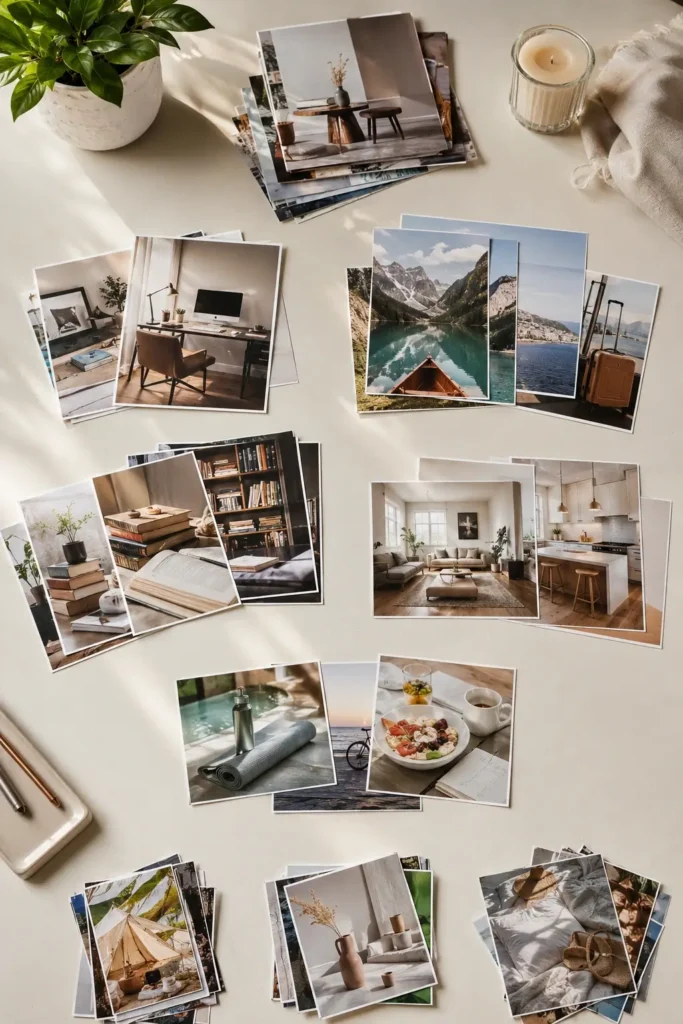
Now go find pictures that match each goal on your list. Look for images that feel personal, not just generic stock photos. A picture close to your actual life will connect with your brain more.
Collect a few extra images too. You will not use every picture you find, and that is fine. Having options makes it easier to pick the ones that fit best.
Step 3: Add Words, Quotes, and Affirmations
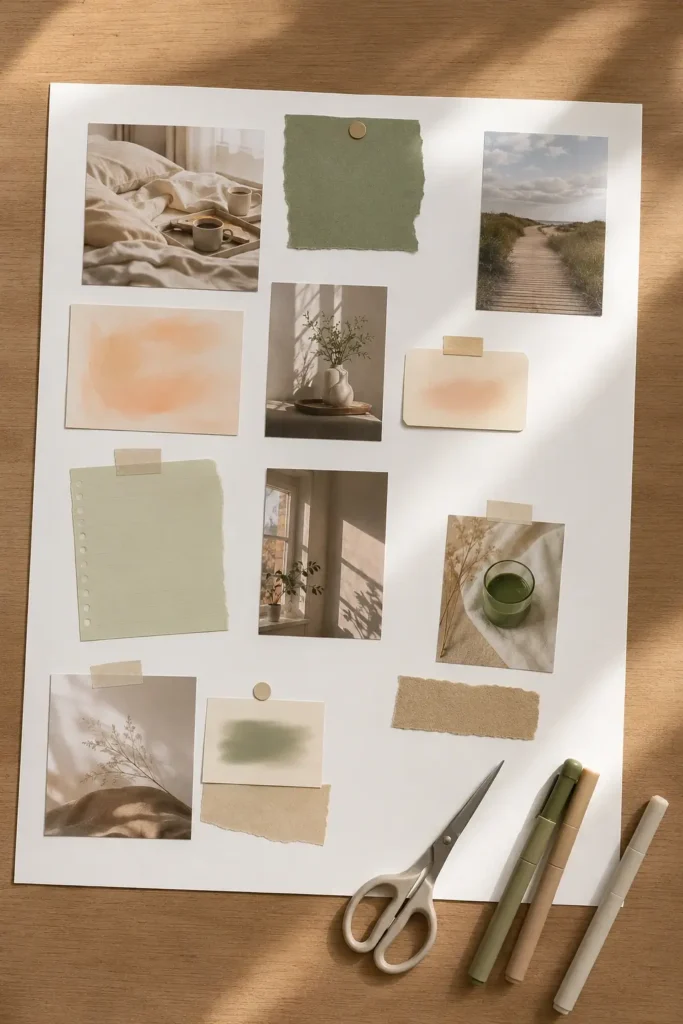
Pictures do not always show the complete story. Add short phrases, quotes, or affirmations that capture the feeling behind each goal. A few words can carry as much weight as an image.
Keep your phrases short and clear. “I run my own business” works better than a long paragraph. Short words are easier to read at a glance.
Step 4: Arrange Your Board
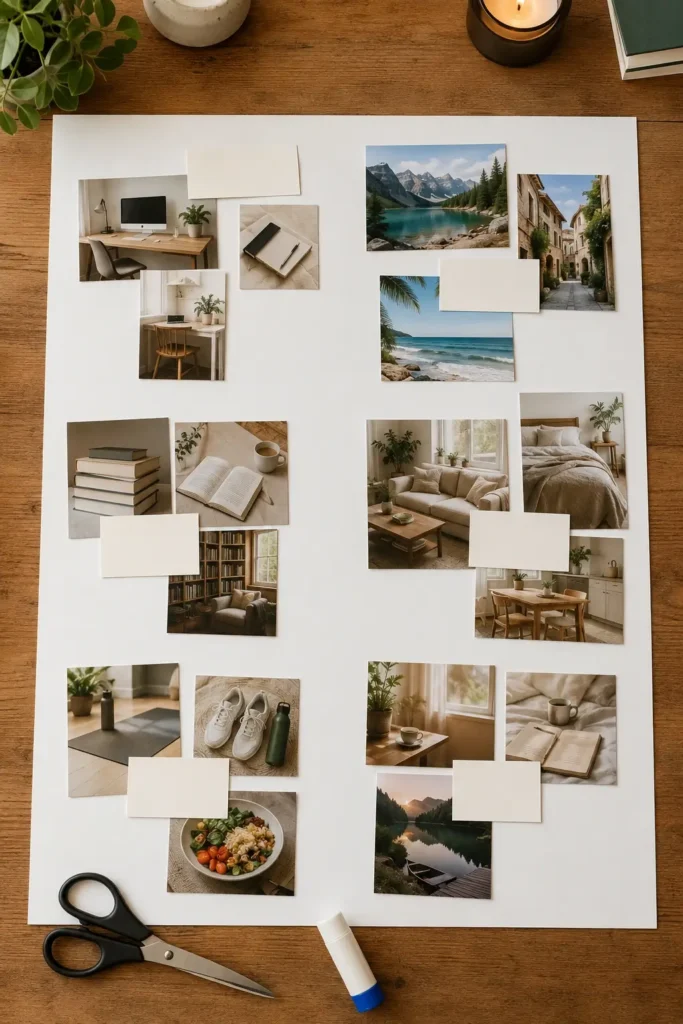
Lay out your images and words before you glue or paste anything. Group items by goal or life area, so your eye can follow your board with ease. Leave some blank space so the board does not feel crowded.
Step back and look at the full layout. Move pieces around until it feels balanced and easy to take in.
Step 5: Put It Somewhere You’ll See Every Day
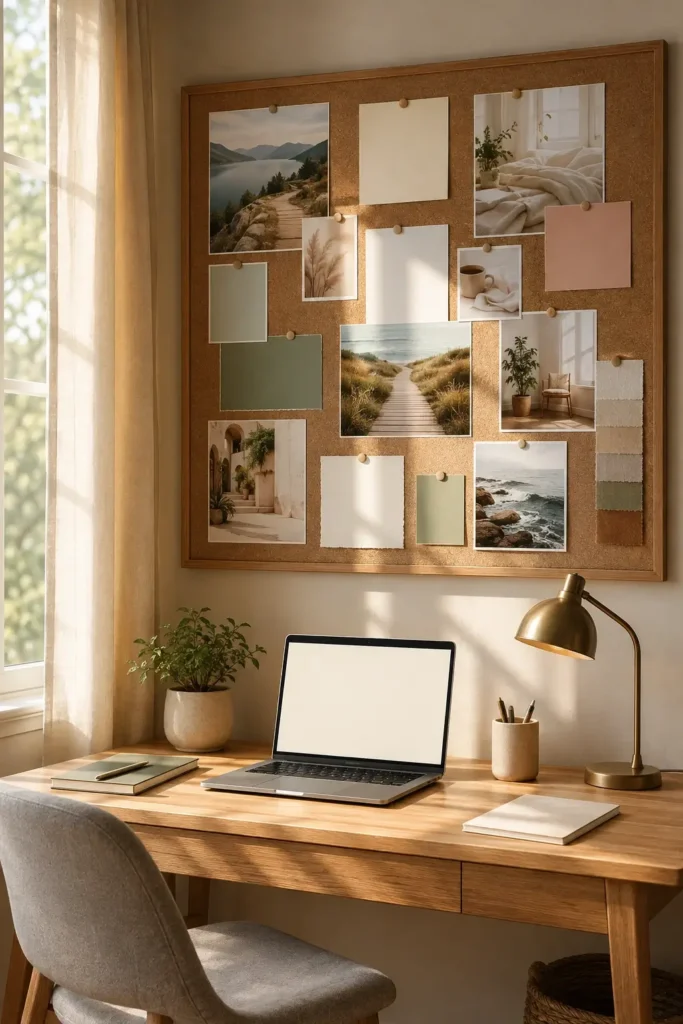
Your board only works if you see it often. Hang it on a bedroom wall, prop it on your desk, or set it as your phone’s lock screen. A board stuck in a closet cannot help you reach a single goal.
Pick a spot tied to a daily habit, like your bathroom mirror or your workspace. That way, you see your board without having to think about it.
Step 6: Take Small Daily Actions
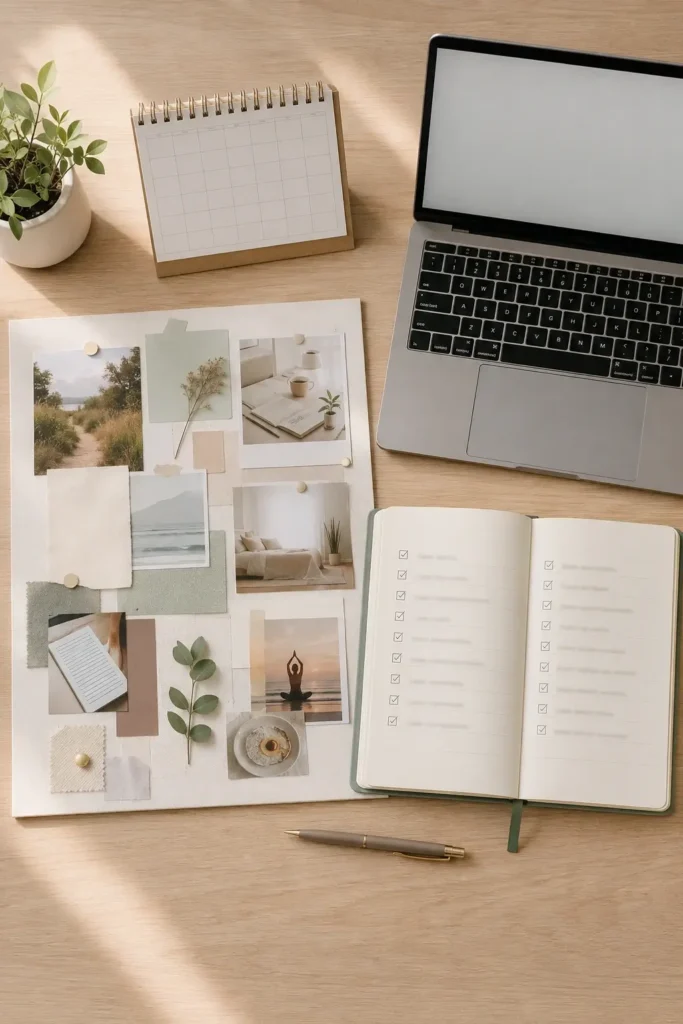
This is the step many people miss, but it makes the biggest difference. Each time you look at your board, pick one small action tied to a goal. Even five minutes of real effort counts.
A vision board is a reminder, not a magic wand. The images point you toward your goals. The daily actions are what actually get you there.
Vision Board Ideas for Different Goals
Need a spark for what to include? Here are examples for some of the most common goals.
Career
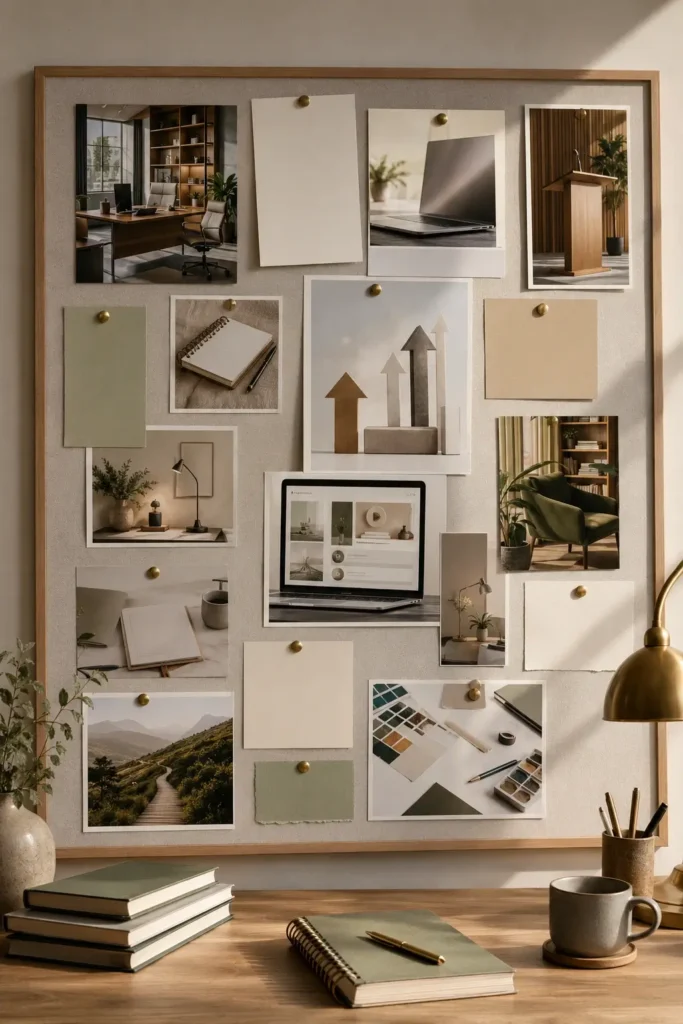
- A photo of a job title or workspace you’re aiming for
- A quote about the kind of leader or teammate you want to be
- An image tied to a skill you want to master
Money
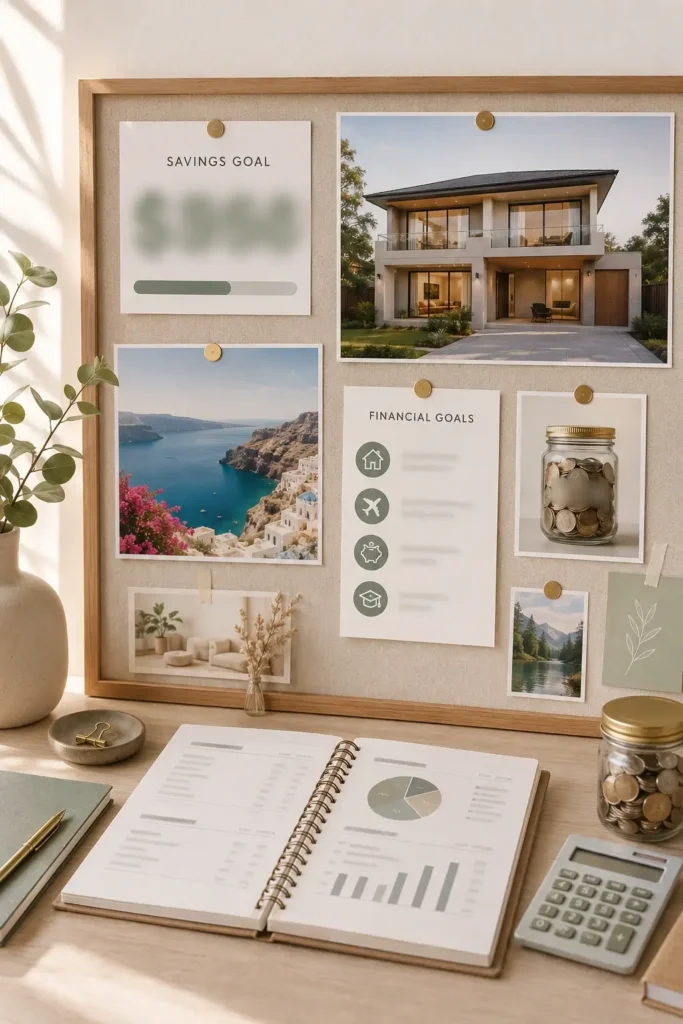
- Your savings goal written in bold numbers
- A photo of something you’re saving toward, like a home or a trip
- A phrase like “I spend with intention”
Health
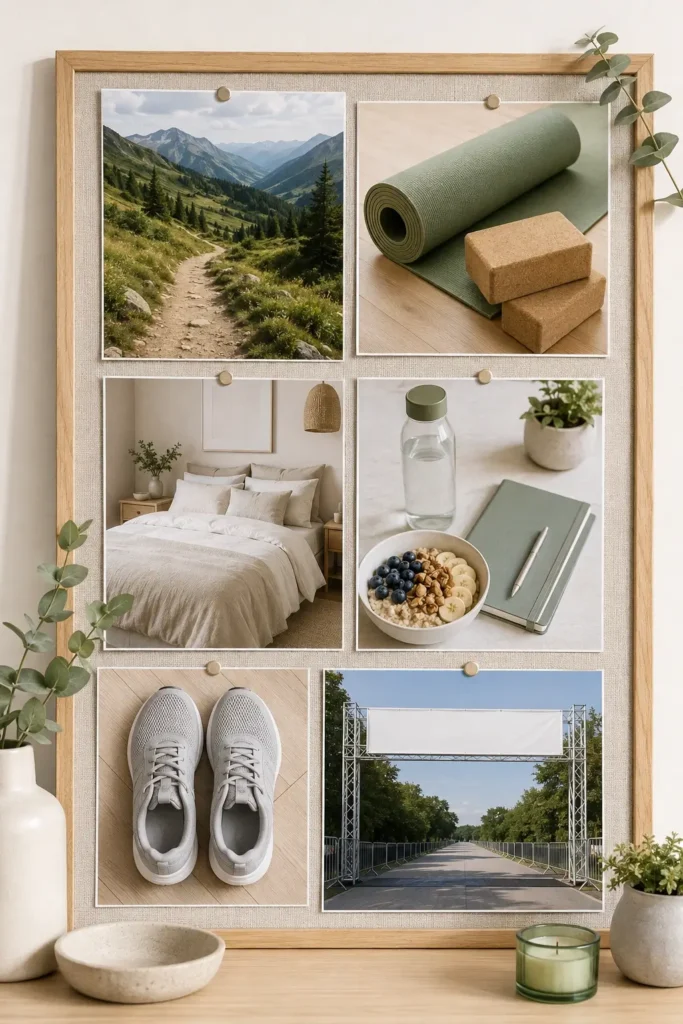
- A photo of an activity you want to enjoy more, like hiking or yoga
- Words like “strong,” “rested,” or “consistent”
- A image tied to a specific health goal, like a race or event
Relationships

- A photo that reminds you of connection and warmth
- A quote about the kind of friend or partner you want to be
- An image of a gathering or trip you’d love to plan with people you love
Travel
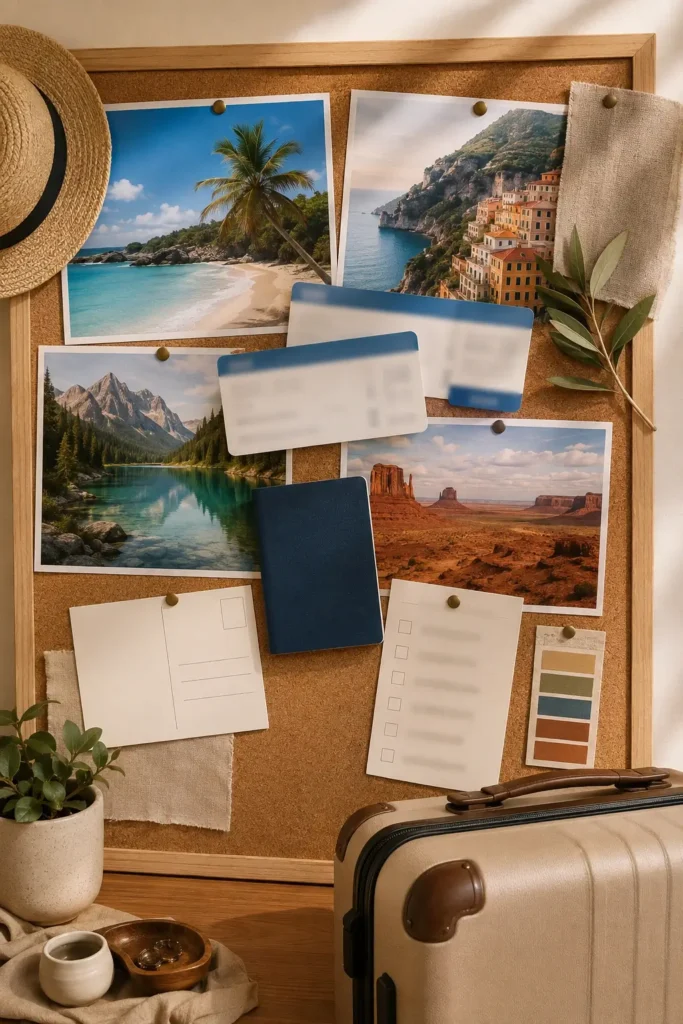
- Photos of places you want to visit
- A packing list or postcard, to make the goal feel real
- A simple phrase such as “I make time for exploration.”
Home
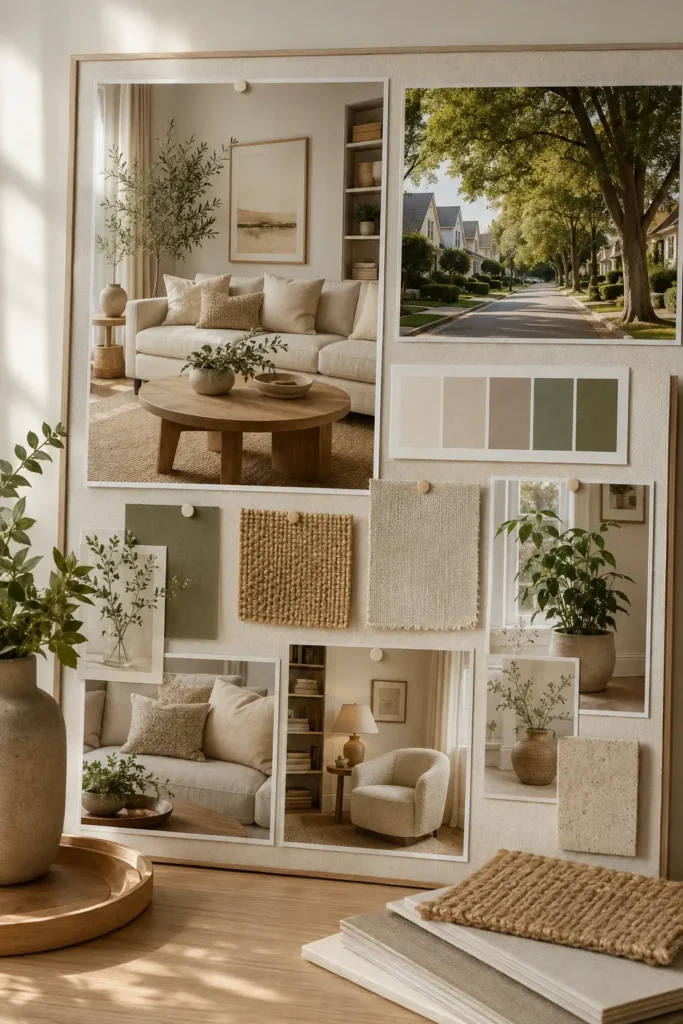
- A photo of a room style or color palette you love
- An image of a neighborhood or city you’d like to live in
- Plants or textures that make you feel calm
Business
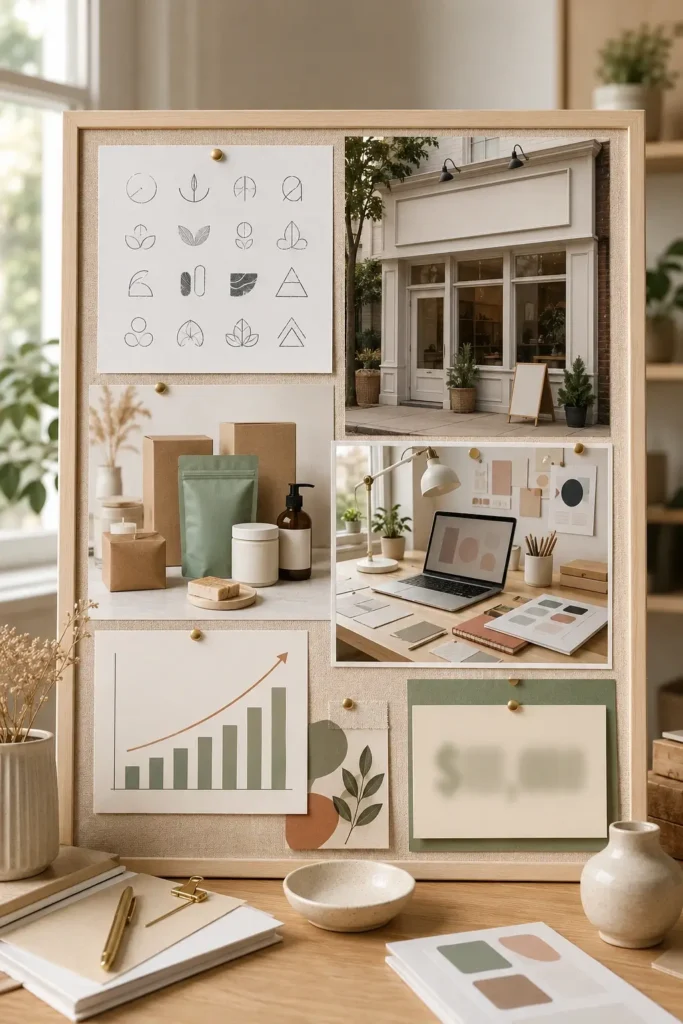
- A logo, storefront, or product mockup tied to your business idea
- A quote about persistence or creativity
- A revenue goal written out in clear numbers
Personal Growth
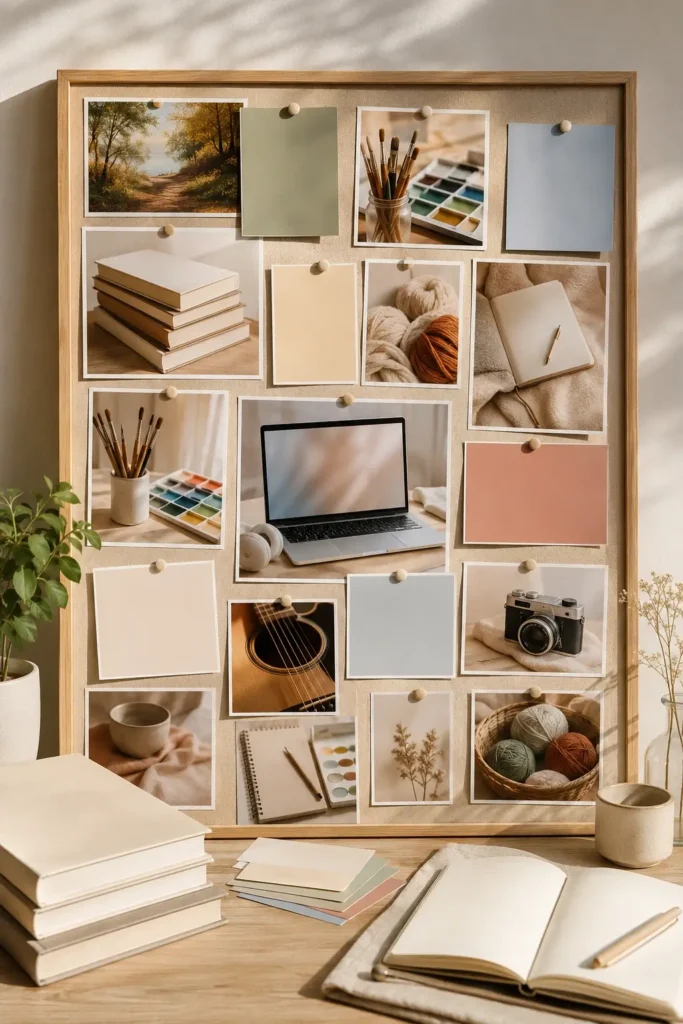
- A book cover, if you want to read or write more
- A quote that reflects the person you’re working to become
- An image tied to a new skill or hobby you want to learn
Common Vision Board Mistakes to Avoid
A few habits can quietly stop your vision board from working. Watch out for these.
Choosing random pictures. Pretty images with no real meaning will not guide you anywhere. Every item on your board should connect to a goal you wrote down first.
Being too vague. Goals like “be happy” or “get rich” give your brain nothing to grab onto. Specific goals are much easier to picture and act on.
Never looking at the board. A board you forget about cannot do its job. Place it where you will see it every day instead of hiding it away.
Expecting results without action. A vision board sets your focus, but it will not do the work for you. Pair every goal with real steps you take on a regular basis.
Adding too much clutter. A board packed with dozens of images can feel overwhelming instead of motivating. Keep it simple, with room for your eyes to rest.
Best Tips for Making Your Vision Board More Powerful
Once your board is built, a few habits can help it work even harder for you.
Review it weekly. Take a few minutes each week to look over your board and check your progress. This keeps your goals fresh instead of fading into the background.
Update it when goals change. Your priorities will shift as you grow, and that is normal. Swap out images or goals whenever your board no longer reflects what you want.
Celebrate progress. When you reach a goal, take a moment to notice it. Add a small mark, sticker, or note to your board to mark the win.
Pair visualization with action. Looking at your board should always lead to a next step, big or small. This pairing is what separates a board that works from one that just sits there.
Stay flexible. Your path toward a goal may look different than you first pictured. Let your board guide your focus, not lock you into one exact plan.
Frequently Asked Questions
Do vision boards actually work?
Yes, when you pair them with real goals and consistent action. A vision board keeps your goals visible and top of mind, but the daily steps are what move you forward.
What Should You Include on a Vision Board?
Include images, words, and quotes tied to specific goals you have written down. Personal photos and clear phrases work better than random inspiration.
Can I make one on my phone?
Yes. Apps like Canva and Pinterest make it easy to build and save a digital vision board on your phone. You can also set it as your lock screen for daily visibility.
How often should I update it?
Update your board every few months, or whenever a goal changes. A board should grow and shift as you do.
Can I have more than one?
Yes. Some people like one board for all their goals, while others prefer separate boards for areas like career or health. Choose whatever keeps you organized.
What’s the best size?
For a physical board, a standard poster size works well for most homes and offices. For a digital board, match your phone or screen size so nothing gets cut off.
Conclusion
You do not need a perfect vision board to get started. Pick one clear goal, and build from there. Choose images and words that actually feel true to you, not just ones that look nice.
Put your board somewhere you will see it every day, and let it guide your focus. Just remember, the board points the way. Your consistent action is what turns the vision into something real. Visit our website for more guides.