

Quick answer: The best coastal dining room decor ideas combine a light oak table, rattan chairs, a white and sea-glass blue palette, washed linen textiles, woven textures and proper scale pendant 30–36 inches above the table, rug extending 24 inches beyond it for an expensive feel at $75–$325 in accents.
A dining room is the dedicated space where meals are shared around a table with seating, storage, and layered light, while coastal style is a light, airy design language drawn from the shoreline: pale wood, white and sea-glass tones, natural fibers like rattan, linen, and jute, and relaxed, unfussy texture.
Put together, coastal dining room decor ideas are not about anchors and shells in every corner; they are about proportion, pale materials, and restraint, which is why a coastal dining room can feel expensive even when most of what you bought was budget-friendly.
Below are 15 coastal dining room decor ideas with real dining measurements, real prices, and the numbers that make a room look considered rather than collected. For more room-by-room proportions, start with our dining and living room guides hub.
- 1. Light oak table at the right scale
- 2. Rattan sides, upholstered hosts
- 3. Rug that extends 24 inches
- 4. Pendants at 30–36 inches
- 5. White and sea-glass palette
- 6. Washed linen everywhere soft
- 7. Low centerpiece, under 12 inches
- 8. Woven texture at three scales
- 9. Art at 57–60 inches
- 10. Sideboard styled like a shoreline
- 11. Hardware and one soft metal
- 12. Sea-glass glassware, matte ceramics
- 13. One live green element
- 14. Mirror that borrows light
- 15. Warm 2700K finish and seasonal swaps
- Budget and measurement table
- 4 coastal dining mistakes that cheapen the room
- Frequently Asked Questions
- Conclusion
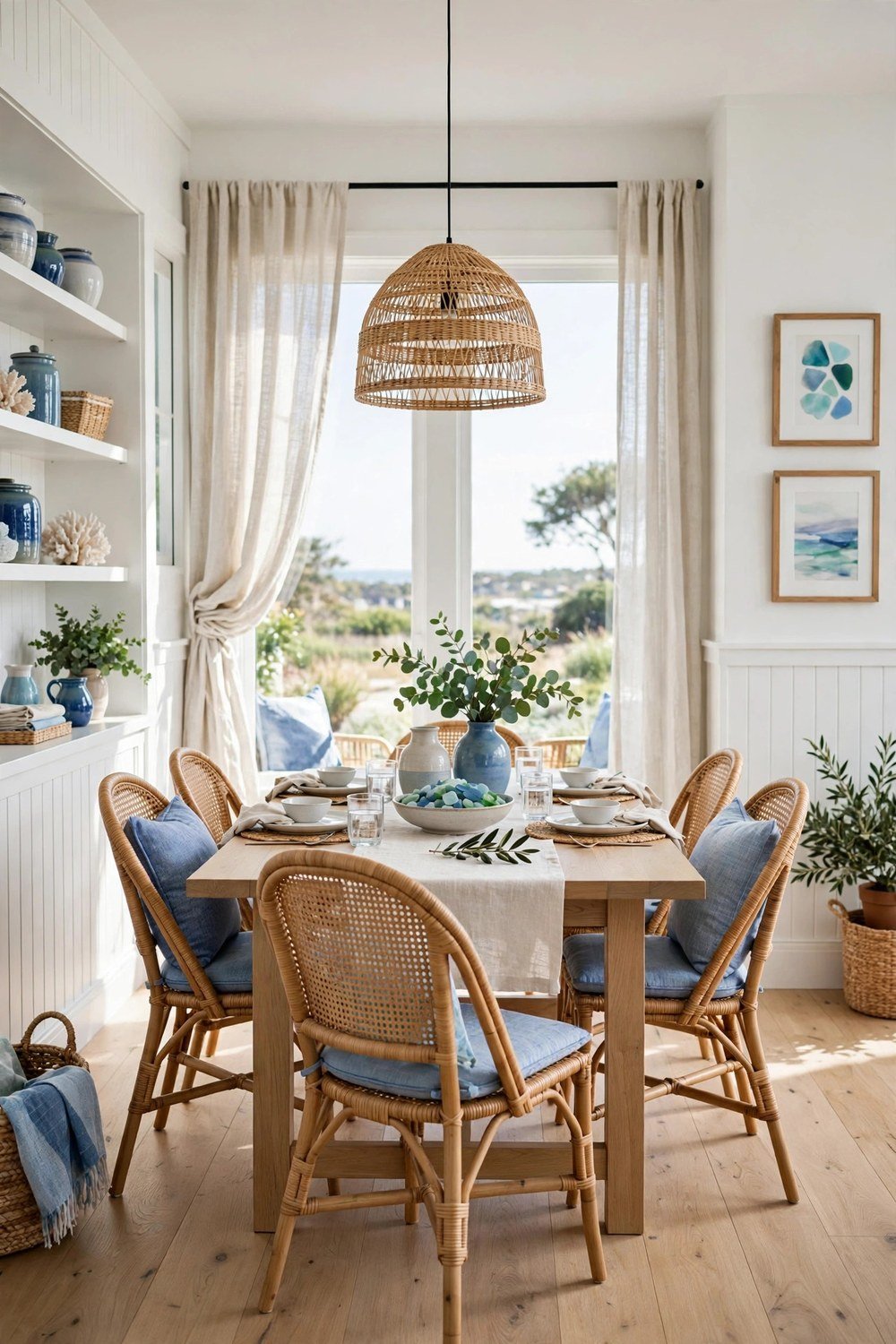
1. Light oak table at the right scale
Every expensive-feeling dining room starts with the table, and coastal dining rooms live on tone and proportion. Choose light oak, whitewash, or pale ash with a matte finish high gloss fights the relaxed coastal brief. The measurable rule: allow 24 inches of table width per person, with at least 36 inches between table edge and wall so chairs pull out 18–20 inches and someone can still pass behind.
A 72×36-inch table seats six; an 84×38-inch seats eight; a 48-inch round suits small rooms. Dark table already owned? A washed linen runner, 14×72 inches on a 72-inch table ($18–$32), lightens it instantly.
2. Rattan sides, upholstered hosts
An all-matching chair set reads as showroom, not home. The expensive look is a controlled mix: rattan or wicker side chairs along the table, two upholstered host chairs in washed white linen at the heads.
Keep seat height at 18–19 inches for a 30-inch table, with 10–12 inches between seat and table apron. Rattan sides run $85–$160 each; hosts $140–$240. On a budget, buy the two host chairs first and unify existing chairs with $12–$20 linen cushions. We break down weaves and grades in these rattan accents that upgrade a dining room.
3. Rug that extends 24 inches
A too-small rug is the most common reason a dining room looks cheap. The measurable rule: the rug extends at least 24 inches beyond the table on all sides, so chair legs stay on it when pulled out. For a 72×36-inch table, that means roughly 120×84 inches in practice, an 8×10-foot rug; go 9×12 feet for an 84-inch table.
Choose flat-weave jute, sisal-look or washable low pile under 0.4 inches so chairs glide. Budget 8×10 options run $120–$260. Leave 12–18 inches of bare floor at the walls to keep the room tailored.
4. Pendants at 30–36 inches
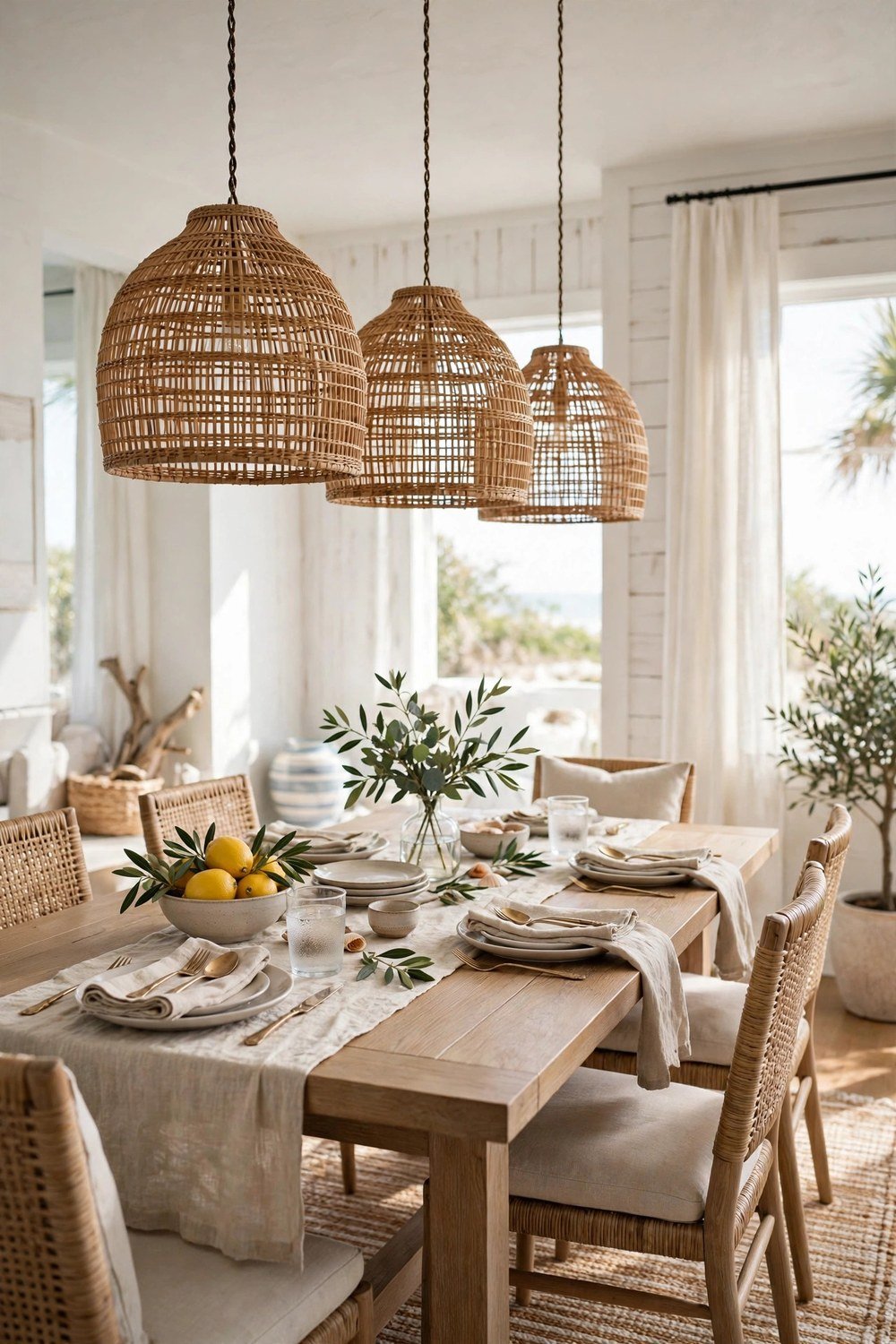
Lighting height quietly separates designed rooms from budget-looking ones. The measurable rule: the pendant bottom sits 30–36 inches above the tabletop with an 8-foot ceiling, plus about 3 inches per extra foot of ceiling. That keeps glow low without blocking faces (seated eye level is 44–48 inches).
Over a 72-inch table, use one 36–48-inch linear pendant about half to two-thirds the table length or two 14–18-inch rattan pendants spaced 24–30 inches apart. Rattan domes run $45–$110 each. For sizing references before drilling, see the American Lighting Association’s pendant placement guidance.
5. White and sea-glass palette
Coastal color fails when it becomes a blue theme room. Use a ratio instead: about two-thirds warm white and pale wood, one-third muted color split between sea-glass blue, soft sage and sand.
Concretely, sea-glass appears in just three places glassware, one art piece, one textile. Muted blue-greens like Benjamin Moore’s coastal colors like Beach Glass 1564 flatter pale wood without turning pastel. Keep navy to a single accent. That discipline lets you add pieces slowly without drifting off-palette.
6. Washed linen everywhere soft
Linen is the coastal fabric because it looks better slightly rumpled. Hang curtains high and wide: rod 4–6 inches above the frame, panels kissing the floor with no more than 1 inch of puddle so daylight floods in. Build the textile layer cheaply: linen runner $18–$32, six napkins $16–$28, linen cushion covers $14–$22 each; the full soft layer lands under $90.
Vary the weave slightly (open-weave curtains, plain-weave napkins) so textures converse. These layers are also your fastest seasonal lever; the seasonal decorating ideas hub shows swapping runner and napkin tones from sea-glass to sage.
7. Low centerpiece, under 12 inches
Centerpieces should start conversations, not block them. The measurable rule: keep height at or under 12 inches (or over 24 inches on tall stems so sightlines pass under), with a footprint near one-third the table length, about 24 inches on a 72-inch table.
The reliable formula: one woven or driftwood-toned tray ($22–$40), one matte ceramic vessel ($18–$35) with grasses clipped to 10–11 inches, and three pillar candles at 3, 4 and 6 inches. Odd numbers, varied heights, one tray that lifts off in a single move before dinner.
8. Woven texture at three scales
Coastal luxe is texture told at three scales. Small: seagrass placemats, 13–15 inches across ($24–$40 for six), which make every plate look placed. Medium: the woven tray under the centerpiece. Large: two lidded baskets, 14–18 inches tall ($28–$55 a pair), flanking the sideboard with spare linens inside.
Vary the weave: tight seagrass, open rattan, chunky basket so the room gains depth instead of looking like one aisle of one store. For placements room by room, our guide to rattan accents for the dining room is the deepest cut.
9. Art at 57–60 inches
Literal art anchors, script signs, and shell collages are what cheapen budget coastal rooms. Choose abstract shoreline photography or soft horizon prints, and hang by the measurable gallery rule: center at 57–60 inches from the floor, with 6–8 inches between sideboard top and frame bottom.
Scale beats subject: one 36×24-inch piece, or two 24×18-inch prints with 2 inches between, over a 54–60-inch sideboard looks intentional; a scatter of 8×10s looks accidental. Framed prints run $35–$90; a file plus budget frame is $20–$35. Keep frames white oak or white.
10. Sideboard styled like a shoreline
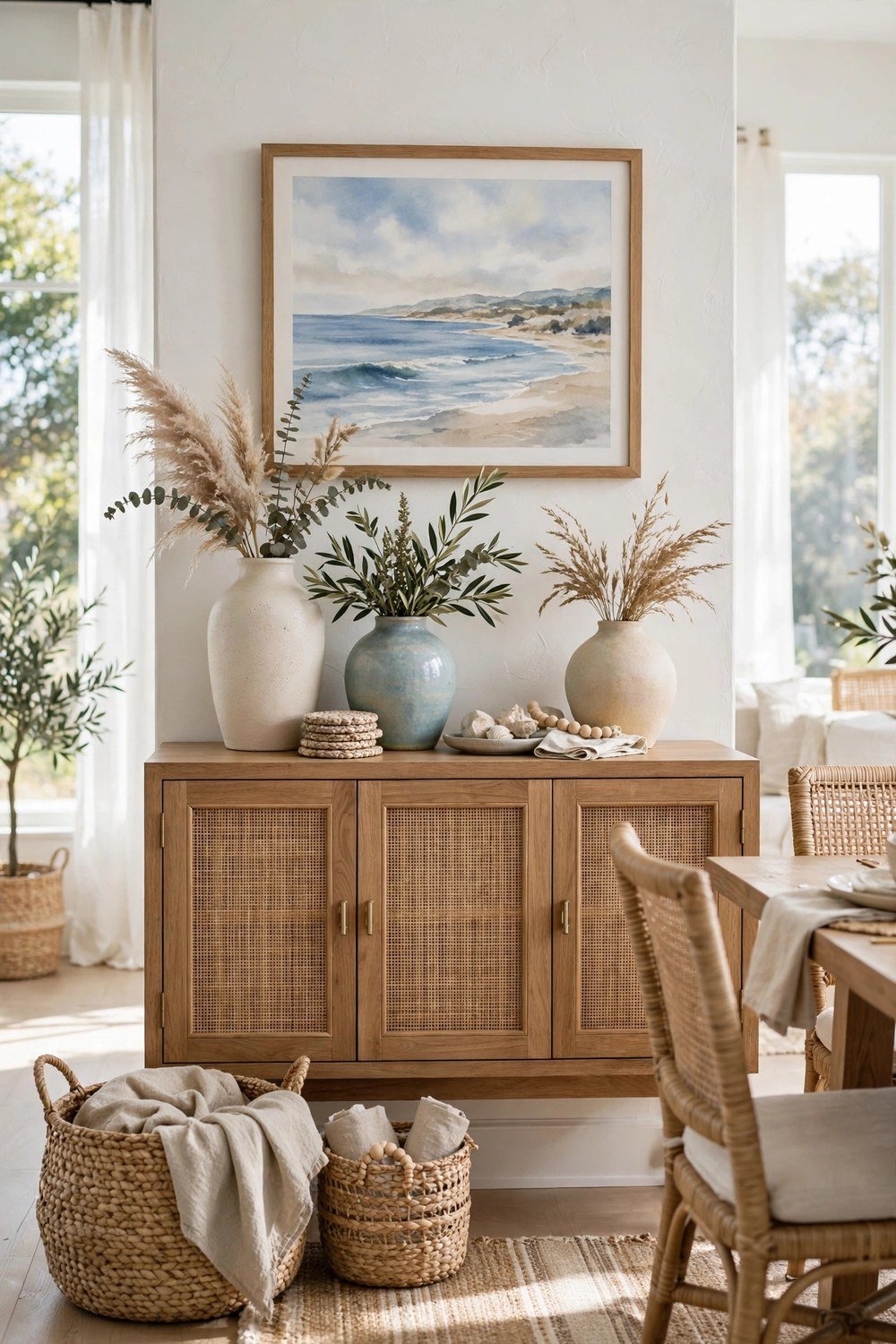
A useful sideboard is 48–60 inches long and 30–34 inches high: linen storage, a drinks spot, and one styled surface. Arrange it as a loose triangle: a ceramic lamp on one side (shade bottom 20–24 inches above the surface keeps light at seated eye level), two or three stacked art books center-left, and two or three matte vases 8–14 inches tall on the other side, with air between groups.
Pale sideboards run $220–$600; whitewashing an existing dark one is a $25 weekend. For shelving versions of this styling, see the mirror post, 15 more coastal dining looks on a budget.
11. Hardware and one soft metal
Small metal changes punch far above their price. Swap sideboard knobs for brushed brass or matte black pulls at $3–$7 each (six drawers: $18–$42), then repeat that one finish in exactly two more places curtain rod, tray handle, lamp base.
One metal, three mentions. Warm finishes suit coastal rooms best: brushed brass and antique bronze pick up oak and rattan, while polished chrome pushes the room contemporary. Under $60 total, this is the change guests consistently describe as “renovated.”
12. Sea-glass glassware, matte ceramics
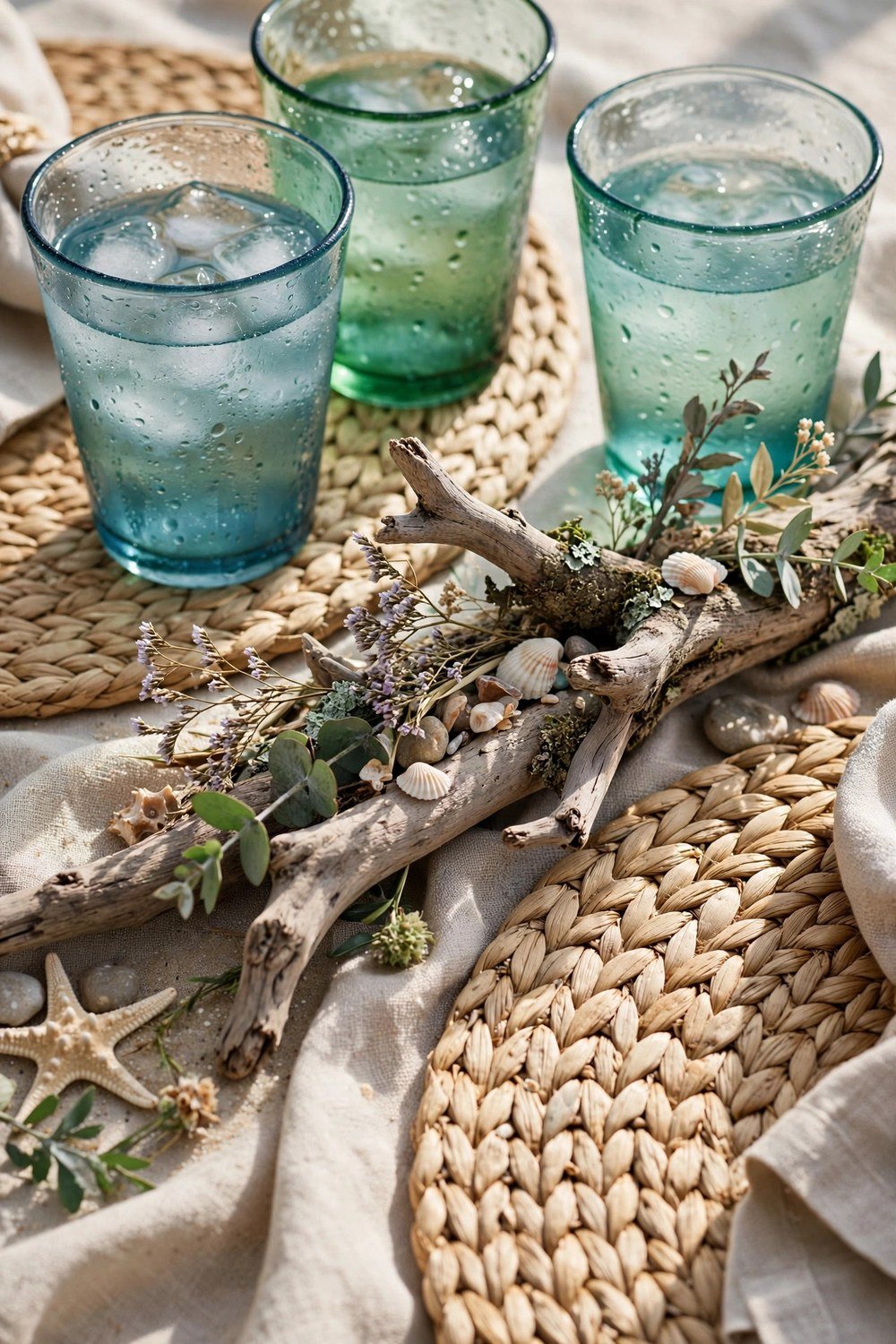
Tableware carries the expensive signal at close range because guests actually touch it. Sea-glass tumblers ($18–$30 for six) scatter light across a white runner like water; matte stoneware in ivory or sand ($28–$48 for four place settings) photographs soft rather than shiny. Add linen napkins with rattan rings ($12–$18 for six).
Mix rather than match sea-glass tumblers beside clear wine glasses you own is correct coastal, not a compromise. Disclosure: LuxeHomeVibe is reader-supported and may earn a small commission on qualifying purchases at no extra cost to you; we recommend the budget version we would buy first.
13. One live green element
One living thing keeps a pale room from feeling staged: a low olive branch or eucalyptus arrangement inside the 12-inch centerpiece rule, or a trailing pothos softening the sideboard line.
A 6-inch potted plant (real, or a convincing $16–$28 faux) in matte ceramic suits indirect light. Skip tall table arrangements; a 20-inch vase photographs editorial and obstructs dinner. For an empty corner, one 48–60-inch faux palm ($45–$85) earns its footprint; two become a conservatory.
14. Mirror that borrows light
Coastal rooms run on reflected light, and one mirror opposite the window does the work of a second window. Choose a round mirror 30–36 inches in diameter in a pale wood or rattan frame ($55–$120), centered at the same 57–60-inch height as art above the sideboard.
At night it doubles the pendant glow; in north-facing rooms it can outperform new lighting. Keep it singular: one confident reflective surface reads as architecture; five small mirrors read as a craft project.
15. Warm 2700K finish and seasonal swaps
A white-and-blue palette under cool bulbs goes sterile by evening. Fit pendants and the sideboard lamp with warm 2700K dimmable bulbs ($10–$18 for the room) so oak warms and sea-glass reads green, not gray.
Then keep the bones permanent table, rug, pendants, art and swap small things twice a year: napkin and cushion color, eucalyptus for dried grasses. The seasonal hub calendars those micro-refreshes, and the room guides carry the palette into adjoining spaces.
Budget and measurement table
Most readers land at $75–$325 in accents with a table already owned, or $300–$650 across a season adding chairs and a rug. The measurement is the protection: get the number right and the budget version reads mid-range.
| Element | Measurable rule | Budget | Mid-range |
|---|---|---|---|
| Pendants | 30–36 in above table; ½–⅔ table length | $45–$110 each | $120–$220 each |
| Rug | Extends 24 in beyond table (8×10 ft for 72-in table) | $120–$260 | $280–$450 |
| Table | 24 in per person; 36 in rear clearance | Runner $18–$32 | Oak 72-in $450–$800 |
| Chairs | Seat 18–19 in; 10–12 in to apron | Rattan $85–$160 ea | Hosts $140–$240 ea |
| Centerpiece | ≤12 in tall; ~⅓ table length | $40–$75 | $80–$130 |
| Art / mirror | Center 57–60 in; 6–8 in above sideboard | $20–$35 | $55–$120 |
4 coastal dining mistakes that cheapen the room
Going literal with nautical props
Rope, anchors, and shell-encrusted frames announce “theme.” Expensive coastal is material, not motif: rattan, linen, pale wood and sea-glass color carry the idea without a single prop.
Undersized rug and pendants
A 5×7-foot rug under a six-person table and a 10-inch pendant over a 72-inch table are the two scale errors that reliably make rooms look budget. Apply the 24-inch rug rule and the half-to-two-thirds fixture rule before ordering.
Letting blue take over
Blue walls, cushions, art, and glassware become novelty. Hold color near one-third of the room, keep two-thirds white and pale wood, and use navy once. Contrast is what the eye prices as quality.
Cold light on a pale palette
Daylight-temperature bulbs turn white walls blue-gray. Warm 2700K costs $10–$18 for the room and flatters every other choice; test one bulb first.
Frequently Asked Questions
What are the best coastal dining room decor ideas on a budget?
Fix scale and light first: pendants 30–36 inches above the table, a rug extending 24 inches beyond it, rattan placemats, washed linen and sea-glass glassware on a light oak or runner-covered table. Those moves deliver most of the expensive feel for $75–$325.
How do I make a coastal dining room feel expensive without renovating?
Correct proportions (pendant height, art at 57–60 inches, a correctly sized rug), mix chair materials — rattan sides with upholstered hosts — and warm bulbs to 2700K. Proportion and light are cheap, and they are what the eye reads as “designed.”
What colors work best for a coastal dining room?
Warm white, sand, pale oak and rattan as about two-thirds of the room, with sea-glass blue, soft sage and one navy accent in the remaining third. Muted blue-greens like Benjamin Moore Beach Glass pair calmly with light wood.
What size rug and table do I need for a coastal dining room?
Allow 24 inches of table width per person and 36 inches of clearance behind chairs; a 72×36-inch table seats six. The rug should extend at least 24 inches beyond the table on all sides — an 8×10-foot rug for most six-seat tables.
Conclusion
A note on products: this post is informational and reader-supported. Where we mention specific product types, buy the version that fits your budget and space; prices above are typical US ranges at major home retailers in 2026. More dining and living ideas live in our rooms collection.
About the author: Emily Lawson is the editor of LuxeHomeVibe, where she tests budget-friendly styling ideas in real apartments and small homes, measuring what works before recommending it.