
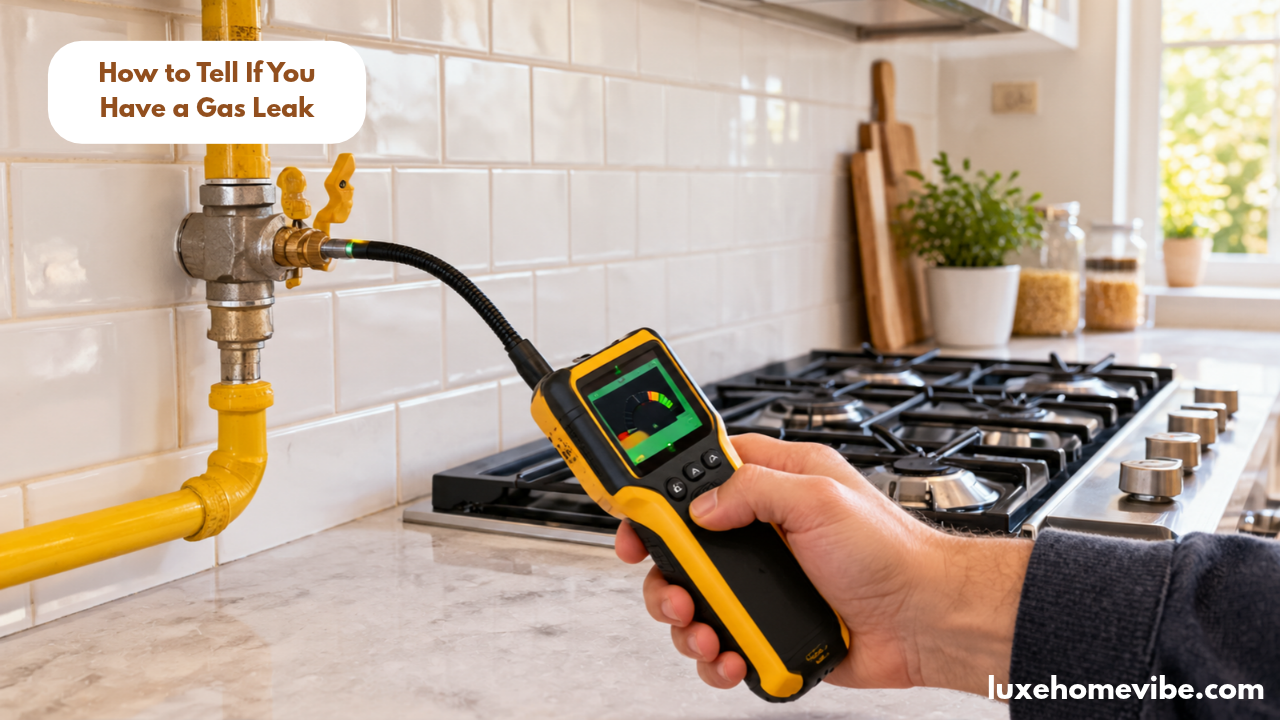
The most recognisable sign of a natural-gas leak is a rotten-egg smell, but hissing near a line, unexplained dead plants, bubbles during a safe fitting check, a moving gas-meter dial or new physical symptoms can also matter. If signs are present, leave first and investigate later.
- If you suspect a leak right now
- Sign 1: A rotten-egg or sulphur smell
- Sign 2: Hissing or whistling near a gas line
- Sign 3: Dead or discoloured plants in an unusual pattern
- Sign 4: Bubbles when soapy water is applied to a fitting
- Sign 5: The gas-meter dial keeps moving when appliances are off
- Sign 6: Physical symptoms that improve outside
- What to do next, step by step
- What not to do
- Where a detector fits after the emergency rule
- FAQ
- Keep the rule simple
If you suspect a leak right now
- Leave the home immediately. Get everyone, including pets, outside.
- Do not touch switches or appliances. Avoid light switches, garage-door openers, phones, flashlights, elevators, and anything that could create a spark while you are inside.
- Do not light anything. No candles, lighters, stoves or fireplace controls.
- Call from outside. Contact your gas utility’s emergency line or 911 once you are away from the building.
- Stay out until cleared. Do not return for belongings, to open windows or to silence an alarm. Follow the utility or emergency responders’ instructions.
A smell, loud hiss or symptoms are enough reason to act. You do not need to prove there is a leak before calling. Utilities would rather check a false alarm than have a household remain in a hazardous building.

Sign 1: A rotten-egg or sulphur smell
Natural gas itself is not the source of the familiar warning odour. Utilities add a chemical called mercaptan so leaks can be noticed by smell. It is commonly described as rotten egg, sulphur, garlic-like or generally unpleasant. Propane products may also have an added odorant, although the strength and character of the smell can vary.
Treat a new or persistent gas odour seriously, especially near a range, water heater, furnace, dryer or gas fireplace. Do not assume it is harmless because it seems faint or because an appliance has “always smelled like that.” Odour can also be less noticeable if you have a cold, have been in the space for a long time, or are affected by odour fatigue.
If the smell is strong, sudden or accompanied by hissing or symptoms, skip the rest of the detective work: leave and call from outside.
Sign 2: Hissing or whistling near a gas line
A pressurised leak may make a hissing, whistling or blowing sound near a pipe, valve, meter, regulator or appliance connection. The sound can be subtle in a noisy utility room, or it may be obvious in an otherwise quiet basement.
Do not put your ear against a fitting or remain beside a noisy line to decide whether it is serious. Leave the area and report what you heard. A professional can isolate the section safely with the right equipment and procedures.
Sign 3: Dead or discoloured plants in an unusual pattern
Escaping gas can displace oxygen in soil and stress vegetation. Outdoors, a patch of dead grass or plants above a buried line may be a clue, particularly when nearby plants look healthy. Indoors, a houseplant near a leaking connection may decline, but that is a much weaker and less specific sign: watering, light, pests and fertiliser cause far more plant problems than gas does.
Use plant changes as supporting evidence, never as a stand-alone diagnosis. A dead plant beside a gas fireplace plus a faint mercaptan smell deserves a call. A single thirsty fern does not.
Sign 4: Bubbles when soapy water is applied to a fitting
A soap test can reveal a leak at an accessible fitting: soapy water is brushed on, and escaping gas forms growing bubbles. This is a confirmation clue, not a general invitation to investigate an active emergency.
Only consider a routine soap check when there are no warning signs no smell, no hissing, no symptoms and the fitting is easy to reach. If bubbles appear, stop. Do not dismantle the joint, tighten it repeatedly, or test it with repeated ignition. Note the location and call a licensed professional. Never use a flame to check for gas.
Sign 5: The gas-meter dial keeps moving when appliances are off
If every gas appliance is genuinely off, including pilot-operated equipment where applicable, continued meter movement may suggest gas is flowing somewhere. This sign is easy to misread. Many homes have pilot lights, water heaters or heating equipment that cycle without being obvious, and meter designs vary.
Use unexpected meter movement as a reason to call the utility or a licensed professional, not as permission to shut off equipment you do not understand. If the movement is paired with odour, sound, or symptoms, leave and make the call from outside.
Sign 6: Physical symptoms that improve outside
Gas exposure and carbon monoxide problems are not identical, but unexplained symptoms should never be brushed aside. Headache, dizziness, nausea, fatigue, eye or throat irritation, and difficulty breathing can have many causes. A pattern that affects several people or pets in the same area, or improves after leaving the building, needs urgent attention.
Leave immediately, call emergency services or the utility from outside and mention the symptoms. Carbon monoxide is colourless and odourless and is produced by incomplete combustion; a combustible-gas detector should not be assumed to detect it unless it is explicitly designed and rated to do so.

What to do next, step by step
After you are outside and have called, stay nearby at a safe distance if responders need information. Tell them where you noticed the smell or sound, which appliances use gas, and whether anyone feels unwell. Do not re-enter to retrieve medication, pets, or documents unless emergency personnel direct you.
If the utility finds no immediate hazard but a fitting still concerns you, arrange a licensed gas professional. Keep children and pets away from the work area and do not use the suspect appliance until it has been checked. Ask the professional to explain what failed, what was repaired, and whether nearby connections were tested.
If the problem is outdoors, such as a damaged line or a strong smell near the meter—keep people away and avoid vehicles or equipment that could ignite gas. Call the utility from a safe location.
What not to do
- Do not search room by room while smelling gas.
- Do not use your phone until you are outside.
- Do not turn lights or appliances on or off.
- Do not open an electric garage door to leave if a safer ordinary exit is available.
- Do not try to locate the leak with a candle or lighter.
- Do not tighten or dismantle a bubbling fitting.
- Do not rely on opening windows and waiting; leave and call.
- Do not assume a detector reading makes the home safe.
Where a detector fits after the emergency rule

This post contains affiliate links. As an Amazon Associate, LuxeHomeVibe earns from qualifying purchases at no extra cost to you.
A detector is most useful before there is an emergency and after professionals have dealt with any immediate problem. A plug-in alarm can monitor a kitchen, laundry room or utility space continuously, while a handheld sniffer can help identify which fitting a professional should inspect. It cannot replace your senses, a utility response or proper repair.
When you are ready to choose equipment, compare the two product types in our guide to the best gas leak detectors for home kitchens, laundry rooms and gas fireplaces. The same guide covers placement: natural gas tends to rise, while propane tends to collect low—and explains why a combustible-gas alarm should not automatically be treated as a carbon-monoxide alarm.
For current handheld and plug-in models, browse the natural gas detector options on Amazon (check current price on Amazon). Choose for your fuel, room and placement requirements rather than buying the first small device that promises whole-home protection.
FAQs
Can I detect a gas leak by smell alone?
Often, the added mercaptan makes natural gas noticeable, but smell is not reliable enough to rule out a leak. Odour strength varies, people differ in sensitivity and carbon monoxide has no smell. Use smell as a warning sign, not as an all-clear test.
Should I open windows if I smell gas?
Leave instead of spending time opening windows. Then call your gas utility or 911 from outside and follow their instructions. Re-enter only when the responsible professionals say you may.
Is a soap test safe?
Only as a limited routine check on an accessible fitting when there are no warning signs. If bubbles form, stop and call a licensed professional. If you smell gas, hear hissing or feel unwell, do not perform a soap test—evacuate and call.
Can a combustible-gas detector replace a CO alarm?
No. Natural gas or propane accumulation and carbon monoxide are separate hazards. Use a detector or alarm specifically rated for the hazard and location; a combination device must explicitly list both functions.
Keep the rule simple
The household rule is easy to remember: smell, hiss, symptoms out, then call. Detectors are valuable monitors, and a well-chosen plug-in alarm or handheld sniffer can add useful information. They work best as part of a calm system: know the signs, keep appliances serviced, place detectors correctly, and let the utility or a licensed professional handle any actual leak.