

The best home stud finder is the one that finds the centre of a stud reliably on your wall type, warns you about live wires, and suits the job. For most homes, a multi-sensor electronic finder is the strongest all-rounder; a magnetic finder wins for quick, light hanging tasks.
This post contains affiliate links. As an Amazon Associate, LuxeHomeVibe earns from qualifying purchases at no extra cost to you.
Quick picks
- Best overall: Franklin Sensors ProSensor M210 wide multi-sensor scanning and live-wire detection make it the most forgiving pick for beginners.
- Best value step-down: Franklin Sensors ProSensor M150 nine sensors, same easy logic, lower price than the M210.
- Best budget: Zircon StudSensor A100, the wallet-friendly slot for picture hanging and lighter shelves.
- Why the right stud matters before the pretty part starts
- Stud Detector vs Stud Finder: Which Do You Actually Need
- How we built this shortlist (no fake testing, just research)
- The 7 best stud finders for home projects
- 1. Franklin Sensors ProSensor M210 best overall
- 2. Franklin Sensors ProSensor M150 best value step-down
- 3. Zircon StudSensor A100 best budget
- 4. C.H. Hanson 03040 Magnetic Stud Finder best magnetic for quick jobs
- 5. The StudBuddy best magnetic for beginners
- 6. StudPoP “On the Level” best magnetic with a levelling nudge
- 7. Klein Tools Magnetic Stud Finder 2-pack best for leaving in two places
- Franklin ProSensor M210 vs M150: the comparison that matters
- Matching the finder to your decorating job
- Five mistakes that cause most bad holes
- Frequently Asked Questions
- Conclusion

Why the right stud matters before the pretty part starts
Every gorgeous room has an unglamorous secret: the heavy things are anchored properly. A large mirror over a console, floating shelves, a wall-mounted TV — all ask the same question first: what is behind the paint?
In most modern homes, studs sit 16 inches apart on centre; 24-inch spacing appears in some newer walls. Hit the centre of a stud and your screw has solid timber to bite into. Miss it, and you are relying on the drywall itself, where toggle bolts and French cleats come in, each with a load limit.
A stud finder is the fastest way to know which situation you are in before you drill: a pilot hole hidden behind a frame is a five-second fix, while a cratered patch of plaster beside your new gallery wall is a weekend project.
Once the anchor points are found, lining everything up is the next job. Pair this guide with our picks for the best self-leveling laser levels for decorating. The finder locates the structure; the laser keeps the arrangement straight.
Stud Detector vs Stud Finder: Which Do You Actually Need
These two terms are used interchangeably in shops and search results, so let us clear it up. A “stud finder” is the everyday name for any tool that locates studs behind a wall; a “stud detector” is usually just another label for the same job most often for electronic scanners that sense density changes behind drywall. In practice, two families matter:
Electronic (digital) stud finders scan the wall and estimate where a stud begins, ends, and centres. Better models use multiple sensors across a wide plate, light up to show the full width, and many add a live-wire warning so you know where not to drill. This family is the right default for shelving, TV mounts and anything heavy.
Magnetic stud finders do not detect the stud itself. They find the metal screws or nails fixing the drywall to the stud, which tells you where the stud runs. Tiny, battery-free, and satisfying to use, as the $10 magnet trick that finds every stud shows. Their weakness: they find fasteners, not centres, so confirm the middle of the stud before hanging anything heavy.
Which do you actually need? For the occasional framed print, a magnet is honestly enough. For a television, floating shelves or a heavy mirror, choose an electronic model with centre-finding and wire detection; small price gap, big confidence gap.
How we built this shortlist (no fake testing, just research)
Shortlist honesty, up front: this is a researched comparison built from manufacturer specifications, recurring picks across established roundups, and patterns in owner feedback not a laboratory verdict. Prices are guides only; always check current price on Amazon before buying. Four attributes decide almost every purchase:
- Centre-finding vs edge-finding. Edge-finders make you mark both sides and do the maths; multi-sensor models that display the stud’s full width remove the guesswork.
- Live-wire detection. A warning before you drill near a cable is worth more than any other single feature for a first-timer.
- Wall type. Standard drywall is easy; lath-and-plaster, tile and textured walls defeat cheap scanners magnets sometimes fare better there, because screws still pull.
- Depth and modes. Deeper modes help on plaster or double drywall but can create false positives; scan slowly, mark twice.
The 7 best stud finders for home projects
1. Franklin Sensors ProSensor M210 best overall
The M210 is the name that recurs as best overall in home roundups, and the specification explains why. Instead of a single sensor hunting for density changes, it uses 13 sensors across a wide plate, so the display shows the edges and the centre of the stud at the same time, and it includes live-wire detection, flagging electrical cables before your drill gets near them.
For decorating work, that width display is what matters: a heavy mirror or a row of shelves demands the exact centre, not “a stud somewhere here.” The trade-offs are size and price — it is one of the bigger handheld finders, at around $59.99 (check current price on Amazon). If you hang things more than once a year, it is the easiest recommendation in this guide. See it on Amazon.
2. Franklin Sensors ProSensor M150 best value step-down
The M150 applies the same Franklin logic with nine sensors instead of thirteen, trimming the price to roughly the $45–55 band (check current price on Amazon) while keeping the experience most owners want: hold flat, slide slowly, watch the stud’s width light up, mark the middle. Roundups consistently place it as the sensible step-down from the flagship.
Choose the M150 for mirrors, shelving and picture walls on drywall; choose the M210 for varied wall types or the widest scan area. The side-by-side is in the comparison box below.
3. Zircon StudSensor A100 best budget
Every shortlist needs an honest budget slot, and the A100 is the pick that keeps getting endorsed in that role. Zircon is one of the longest-running names in the category, and the A100 covers the fundamentals for around $24 (check current price on Amazon): it locates stud edges on standard drywall and asks very little money for the privilege.
The compromise is technique: with an edge-finding budget scanner you mark one edge, mark the other, and split the difference slower and less certain than a wide multi-sensor display, but entirely workable for a first apartment or occasional picture hanging. Check current price on Amazon.
4. C.H. Hanson 03040 Magnetic Stud Finder best magnetic for quick jobs
For light work, nothing beats the magnet approach for speed. The C.H. Hanson 03040 is a small rare-earth magnetic finder you glide over the wall until it pulls toward a drywall screw; mark the spot, find a second screw above or below, and you have your stud line. No batteries, no calibration, no beeping.
It finds no centre and warns about no wires, so it is not the tool for a television or a loaded shelf, but for frames and seasonal decorating it is the finder owners reach for most. Full technique: our magnetic stud finder how-to.
5. The StudBuddy best magnetic for beginners
The StudBuddy makes the magnetic idea friendlier: it sticks to the wall at the fastener it finds, leaving a marker in place while you check for the next screw up or down the stud a small kindness when you are on a step stool holding a level, a pencil and a frame.
Like all magnets, it finds fasteners rather than centres and cannot see wires, so confirm the centre with a slim nail before anything heavy goes up.
6. StudPoP “On the Level” best magnetic with a levelling nudge
StudPoP adds a small levelling reference to the magnetic format, aimed at picture hanging: find the fastener, check your line, mark, move on.
No centre display, no wire warning but for a gallery-wall afternoon it is a neat one-tool shortcut, especially paired with a laser line. Before choosing a family, read digital vs magnetic stud finders.
7. Klein Tools Magnetic Stud Finder 2-pack best for leaving in two places
Klein Tools is a trades name, and its magnetic two-pack is the pragmatic pick: one for the tool drawer, one for the junk drawer. Magnetic finders get lost precisely because they are small. Functionally you are in the same territory as the other magnets: fastener-finding, battery-free, silent.
Prefer electronics with wire warnings and centre displays? Stay with picks one to three and check current price on Amazon.
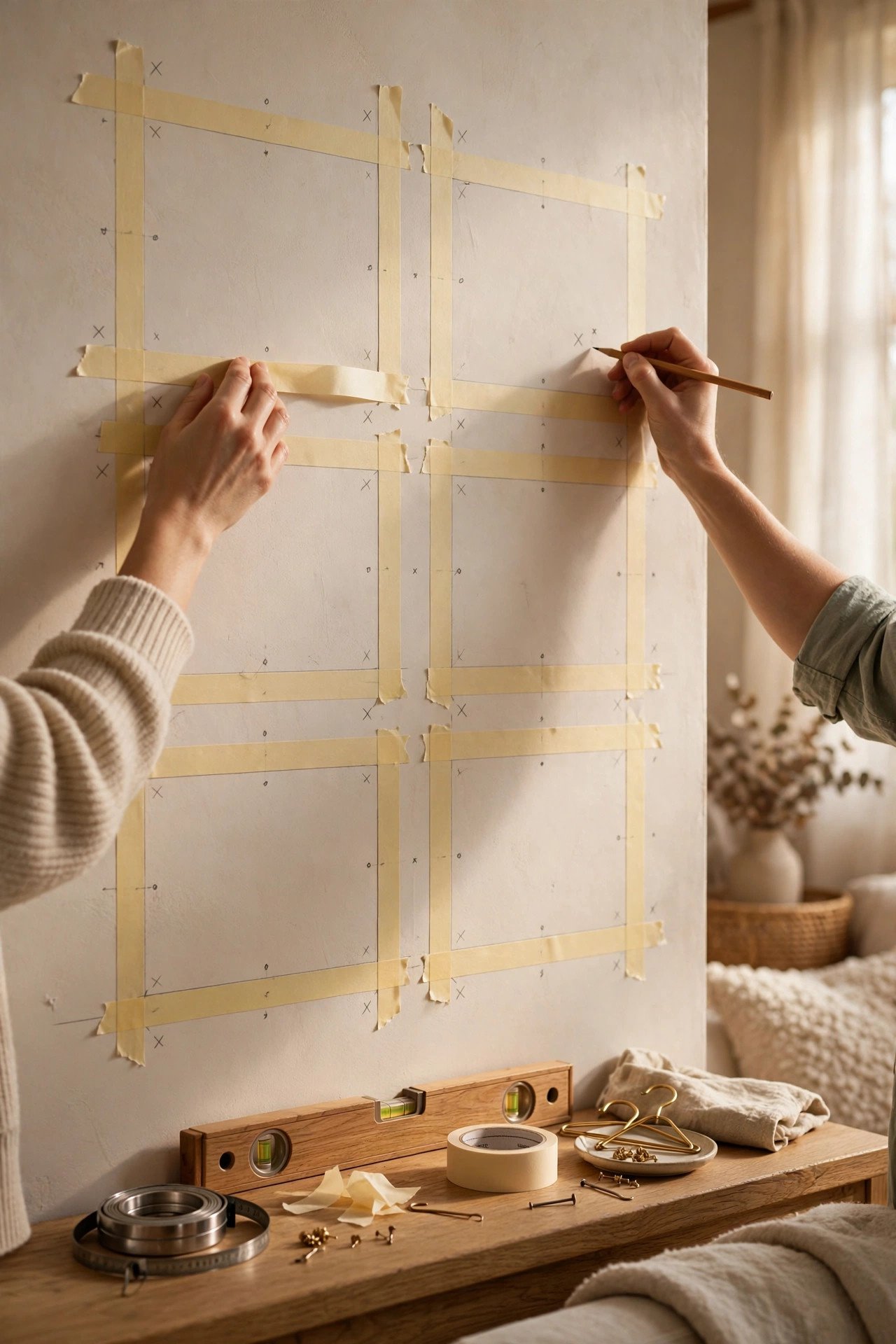
Franklin ProSensor M210 vs M150: the comparison that matters
| Franklin ProSensor M210 | Franklin ProSensor M150 | |
|---|---|---|
| Sensors | 13 | 9 |
| Live-wire detection | Yes | Check the listing — spec varies by version |
| Stud display | Full width + centre shown simultaneously | Width shown; narrower scan than M210 |
| Typical price | ~$59.99 (check current price on Amazon) | ~$45–55 (check current price on Amazon) |
| Best for | Mixed walls, heavy mounts, nervous beginners | Drywall homes, mirrors, shelves, value |
The honest summary: both spare you the edge-marking ritual of cheap scanners. The M210’s extra sensors buy a wider, more confident picture of the wall — worth it for televisions and varied construction. The M150 buys most of that experience for less, which is why it anchors the value slot. See it on Amazon before deciding, since Franklin’s bundles and pricing shift often.
Matching the finder to your decorating job
Heavy mirror over a console or mantel. Centre accuracy is everything; a fixing near a stud edge can tear out under sustained load. Use the M210 or M150, mark both edges, drill the centre, and consider a French cleat to spread the weight.
Floating shelves. Scan the whole run and mark every stud (expect roughly 16-inch spacing), then place brackets on the structure rather than forcing symmetry the wall cannot support.
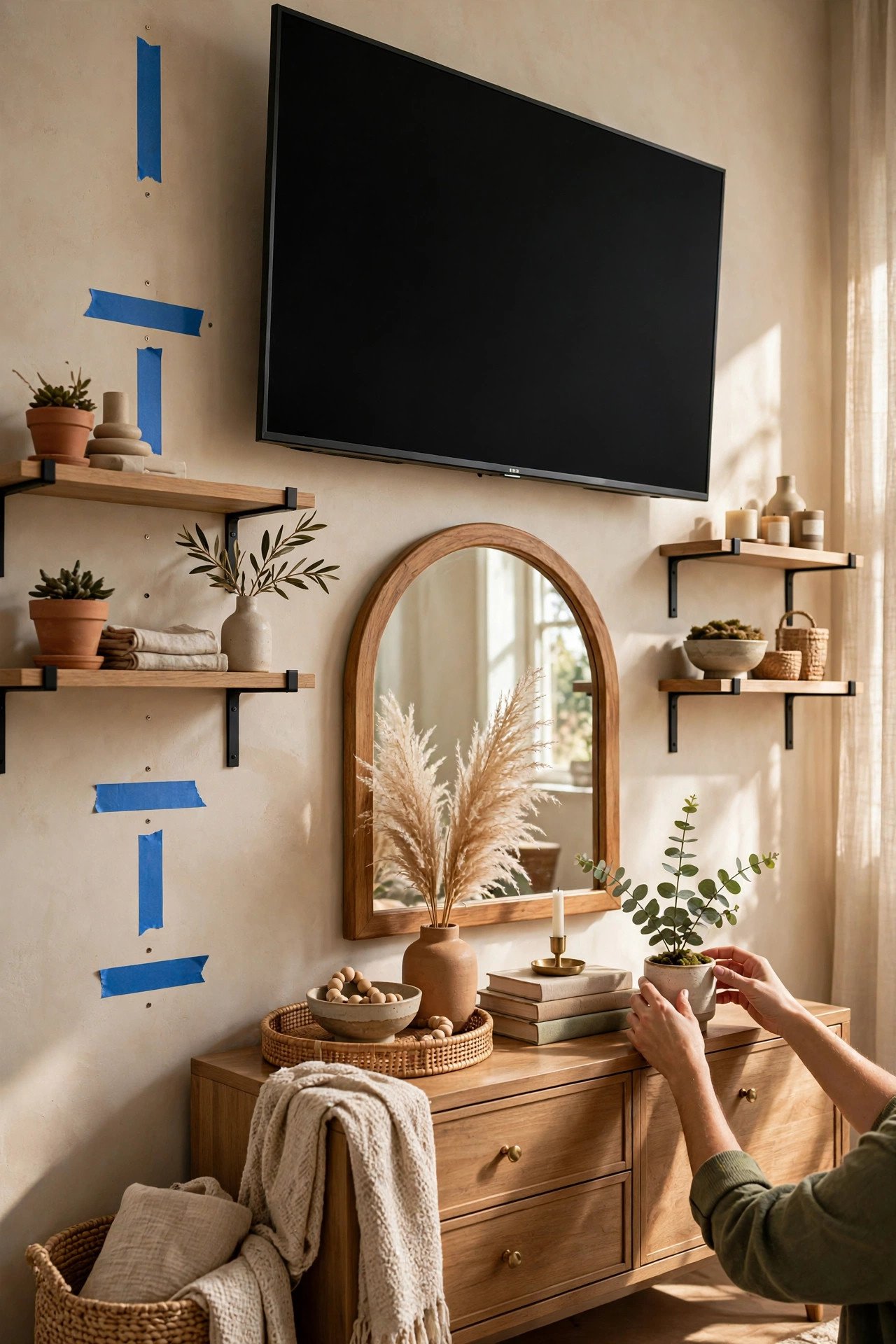
Wall-mounted TV. The highest-stakes common job: two studs, centred fixings, zero tolerance for wire surprises. Follow our step-by-step for how to find studs for a TV mount and favour a finder with live-wire detection.
Gallery wall. Most frames are light, so a magnet suffices for most pieces — but anchor the one oversized statement frame into a stud and let smaller pieces use quality picture hooks.
Plaster or lath walls. Scanners can struggle with uneven density; magnets locating lath screws sometimes fare better. Test in a hidden spot and keep rated toggle bolts as plan B.
Five mistakes that cause most bad holes
- Scanning too fast. Electronic finders need a slow, flat slide; tilting mid-pass corrupts the reading.
- Marking the first beep and drilling. Scan each area two or three times, mark both edges, then use the centre.
- Assuming 16-inch spacing is guaranteed. Measure from a confirmed stud, but verify every fixing point.
- Ignoring wire warnings. A live-wire alert is a stop sign, not a suggestion; shift the fixing.
- Using one anchor type for everything. Studs for load, toggle bolts for hollow-wall weight, hooks for light frames match hardware to the job.
Frequently Asked Questions
Is a stud detector the same as a stud finder?
In everyday use, yes — “stud detector” usually just means an electronic stud finder. The real distinction is magnetic finders, which locate drywall screws, versus electronic models, which scan for the stud itself.
Which stud finder is best for hanging a heavy mirror?
A multi-sensor electronic finder such as the Franklin ProSensor M210 or M150, because it shows the stud’s full width and centre. Pair it with a French cleat or two centred fixings for sustained loads.
Can a stud finder detect wires and pipes?
Many electronic models include live-wire detection, and some scanners add metal modes. No finder guarantees pipe detection, so drill slowly and stop if resistance feels wrong.
Why does my finder give different readings on plaster walls?
Lath-and-plaster walls have uneven density, which confuses density-based scanners. Magnetic finders can be more reliable there because they locate the lath screws; always test behind furniture first.
Do I still need wall anchors if I have a stud finder?
Sometimes. Anchors and toggle bolts remain useful between studs for lighter pieces, but shelves, TVs and big mirrors should be fixed into studs whenever the layout allows.
Conclusion
For most decorating homes, the shortlist is simple. The Franklin ProSensor M210 is the confident all-rounder, the M150 keeps the same logic for less, and the Zircon StudSensor A100 covers the budget slot honestly with a magnetic finder like the C.H. Hanson 03040 as the battery-free backup you will use more than you expect. Pick your tier, check the current price on Amazon, and hang the beautiful thing properly once.